When choosing a grease gun, price should not be the only consideration. More importantly, you should evaluate how much efficiency it can improve and how much time it can save. Whether you are an automotive technician, construction machinery operator, agricultural equipment maintenance worker, or factory maintenance professional, selecting the right tool can make every lubrication task more efficient and productive.
Many users encounter the following challenges when selecting a grease gun:
- Grease cannot be injected properly, or sufficient pressure cannot be built up.
- Grease leakage creates a messy work environment.
- The grease coupler frequently gets stuck and is difficult to remove.
- Extended operation causes hand fatigue and reduces work efficiency.
In fact, most of these problems stem from choosing a tool that does not match the application requirements or from a mismatch between product quality and usage demands. This article will help you select the most suitable grease gun type, grease gun kit, and accessory combination based on your work environment, usage frequency, and budget considerations.
A Complete Guide to Grease Gun Types: Manual, Pneumatic, and Cordless
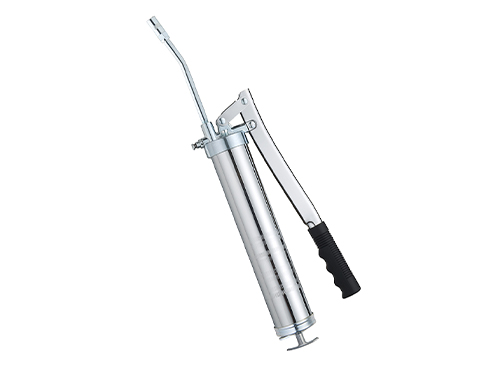
Ideal Applications: Occasional maintenance, limited budgets, outdoor environments, locations without electricity or compressed air, and emergency repair backup.
The greatest advantage of a manual grease gun is its simple structure, reliability, and durability. It operates independently of electrical power or compressed air, making it particularly valuable for agricultural equipment users and remote job sites. If lubrication tasks are performed infrequently (for example, once or twice per month), a manual grease gun is often the most cost-effective solution. For general maintenance users, DIY and Mini grease guns are also worth considering. Their compact size makes them easy to store and carry while still providing sufficient performance for most daily lubrication needs.
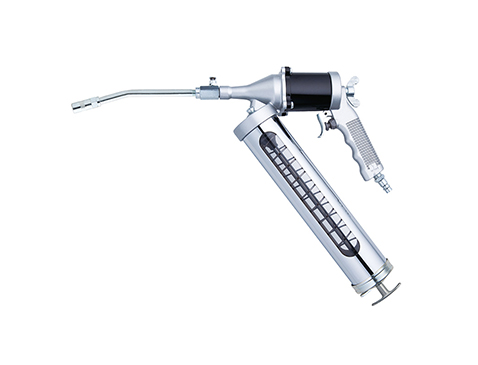
Ideal Applications: Factory production equipment, heavy machinery, professional automotive repair shops, and continuous operation environments.
Pneumatic grease guns use compressed air as their power source, providing stable and consistent grease output. As long as an adequate air supply is available, they can operate continuously without concerns about battery life. For users with access to a reliable air compressor and demanding high-frequency lubrication tasks, pneumatic grease guns are often the ideal choice for balancing efficiency and operating costs.
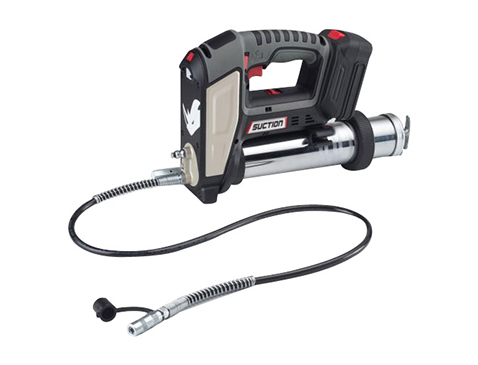
Ideal Applications: Construction site inspections, fleet maintenance, agricultural machinery servicing, and multi-location lubrication tasks.
Cordless grease guns are powered by rechargeable batteries and offer the advantage of unrestricted mobility. Users can easily move between equipment and work areas without being limited by hoses or power sources. Based on feedback from professional technicians, upgrading from a manual grease gun to a cordless grease gun can significantly reduce maintenance time while minimizing hand fatigue. With excellent mobility and no dependence on compressed air, cordless grease guns have become the most popular type of grease gun on the market today.
Comparison Table
When selecting a grease gun, it is recommended to evaluate your lubrication frequency and work environment:
If lubrication tasks are performed only occasionally each month, a manual grease gun is usually sufficient.
If long periods of continuous operation are required and compressed air equipment is already available on-site, a pneumatic grease gun generally offers the best cost-performance ratio.
If lubrication points are spread across multiple locations and frequent movement is required, a cordless grease gun should be prioritized to improve efficiency and reduce operator fatigue.
Key Considerations When Choosing a Grease Gun: The Cheapest Option Is Not Always the Most Cost-Effective
When selecting a grease gun, many buyers focus solely on the purchase price while overlooking the overall cost of ownership.
The actual cost typically includes the following:
- Initial Investment: Grease gun, grease gun kit, and accessories (such as couplers, hoses, and nozzles)
- Operating Costs: Grease and grease cartridges
- Maintenance Costs: Seals, O-rings, and other replacement parts
- Hidden Costs: Grease waste caused by leakage, rework due to failed lubrication, and additional cleaning and maintenance labor
A low-cost grease gun with poor sealing performance may leak grease during every use. Over time, the accumulated grease waste, cleaning labor, and productivity losses can far exceed the initial price difference between a low-quality and a high-quality tool.
Therefore, professional buyers typically evaluate the following factors in addition to price:
- Working pressure and maximum pressure rating
- Coupler locking performance
- Thread and piston sealing capability
- Compatible grease gun accessories
- Suitable grease types
- Availability of replacement parts
Suction Industrial has helped an environmental engineering company improve its lubrication maintenance efficiency. The company's maintenance team used approximately four 400 c.c. grease cartridges per week for equipment servicing. Previously, using manual grease guns required an average of 80 minutes to complete the task. After switching to cordless grease guns, the maintenance time was reduced to approximately 10 minutes, resulting in a time savings of about 87.5%.
Based on more than 60 years of grease gun manufacturing experience, Suction Industrial has found that most after-sales issues are not caused by product defects but rather by selecting the wrong type of grease gun or improper operation. For example, using a manual grease gun in a high-frequency lubrication environment or using incompatible grease can significantly reduce operating efficiency.
As a result, selecting the right grease gun is not simply a tool purchase. It is an investment that improves maintenance efficiency, reduces downtime risks, and helps control long-term operating costs.
FAQ
Below are answers to some of the most commonly asked questions when purchasing a grease gun.
1) What is the primary purpose of a grease gun?
A grease gun is a lubrication tool used to precisely inject grease into bearings, joints, universal joints, and other moving components. These parts generate friction and heat during operation. Proper and regular lubrication helps reduce friction, maintain equipment efficiency, and extend service life. For more information, see: What Is a Grease Gun?
2) What is the difference between pneumatic and cordless grease guns?
Pneumatic grease guns are powered by compressed air and require an air compressor. They are ideal for fixed lubrication stations such as heavy machinery and professional automotive repair facilities. Cordless grease guns are powered by rechargeable batteries, offering greater mobility and flexibility. They are particularly suitable for applications requiring frequent movement, such as construction site inspections and agricultural machinery maintenance.
3) What is the typical operating pressure of a grease gun?
Grease gun pressure ratings vary depending on design and materials. For example, Suction Industrial grease guns offer the following pressure ranges:
- Manual Grease Gun (400 c.c.): 4,500 psi – 8,000 psi
- Pneumatic Grease Gun: 2,400 psi – 6,000 psi
- Cordless Grease Gun: 6,000 psi – 8,000 psi
Most lubrication applications require pressures between 3,000 psi and 8,000 psi, although actual requirements depend on equipment design and grease specifications.
4) Why is my grease gun not dispensing grease?
- Air trapped inside the grease gun (commonly known as air pocket)
- Incorrect grease cartridge installation
- Blocked grease fitting or coupler
- Grease that is too thick or hardened
- Excessive back pressure at the lubrication point causing grease to flow backward inside the gun
- Cold weather causing the grease to harden
5) Can any grease be used with a grease gun?
Different grease guns may be compatible with different NLGI grease grades. For example, Suction Industrial grease guns are designed for use with NLGI Grade #2 grease. Always verify grease compatibility with the product specifications before use.
6) Why do different markets prefer different grease gun capacities?
The primary reason is the local grease cartridge packaging standard.
- European and North American Markets: Commonly use 400 c.c. (14 oz.) grease guns
- Australian Market: Commonly use 450 c.c. to 500 c.c. (16 oz.) grease guns
- Japanese Market: Commonly use Jiabara-type grease guns